Differences between Old Testament Prophets and New Testament Prophets.
Rev, Dr Jim Master · Aug 2, 2026
Back to Media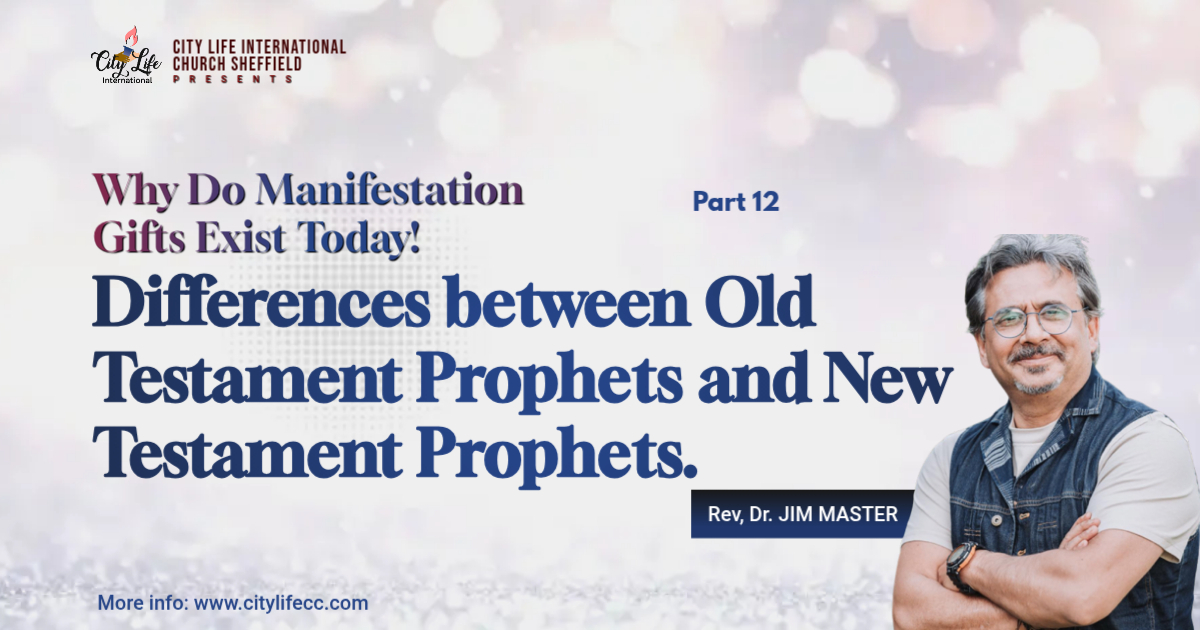
About This Message
Differences Between Old Testament Prophets and New Testament Prophets (Part 12) What distinguishes the prophets of the Old Testament from those of the New Testament? Are they the same, or has the ministry of prophecy changed under the New Covenant? In this insightful teaching, Rev. Dr. Jim Master explores the biblical distinctions between Old Testament prophets and New Testament prophets, helping believers understand how the gift of prophecy functions in the Church today. Drawing from both Scripture and practical examples, this message explains the unique role of Old Testament prophets as God's authoritative spokesmen, entrusted with delivering divine revelation to Israel, often declaring judgment, calling people to repentance, and foretelling future events. The teaching then contrasts this with the ministry of New Testament prophecy, which operates under the guidance of the Holy Spirit to strengthen, encourage, comfort, and edify the body of Christ. As part of the ongoing series "Why Do Manifestation Gifts Exist Today?", this session addresses common misconceptions about prophecy and emphasizes the importance of testing prophetic words according to Scripture. Rev. Dr. Jim Master also explains why every believer should understand the biblical purpose of prophecy and how spiritual gifts are intended to build unity and maturity within the Church. Whether you are new to the gifts of the Spirit or seeking a deeper theological understanding of prophetic ministry, this teaching provides clear biblical foundations, practical wisdom, and balanced instruction that will help you grow in discernment and confidence.
Sermon Notes
Most people don’t realise there’s a di0erence between a New Testament prophet
and an Old Testament prophet, or between Old Testament prophecy and **New
Testament prophecy**.
Where he saw the people of Israel camped, tribe by tribe. Then the Spirit of God came
upon him, Numbers 24:2 NLT
The message of one who hears the words of God,
who sees a vision from the Almighty, who bows down with eyes wide open:
Numbers 24:4NLT
the message of one who hears the words of God,
who has knowledge from the Most High,
who sees a vision from the Almighty,
who bows down with eyes wide open:
Numbers 24:16NLT
But any prophet who falsely claims to speak in my name or who speaks in the name of
another god must die.’
Deuteronomy 18:20–22 NLT
“But you may wonder, ‘How will we know whether or not a prophecy is from the Lord?’ If
the prophet speaks in the Lord’s name but his prediction does not happen or come true,
you will know that the Lord did not give that message. That prophet has spoken without
my authority and need not be feared.
Deuteronomy 18:20–22 NLT
Let two or three people prophesy, and let the others evaluate what is said. But if
someone is prophesying and another person receives a revelation from the Lord, the
one who is speaking must stop.
1 Corinthians 14:29–32 NLT
In this way, all who prophesy will have a turn to speak, one after the other, so that
everyone will learn and be encouraged. Remember that people who prophesy are in
control of their spirit and can take turns.
Greek study: diakrino*
“diakrino” (διακρίνω)
Diamond dealers evaluate the carat, cut, color, clarity.
In the Old Testament, prophecies were judged. If one part was wrong, then all was
wrong.
In the New Testament, one part may be true, another false—and each part is to be
judged separately.
But if someone is prophesying and another person receives a revelation from the Lord,
the one who is speaking must stop. In this way, all who prophesy will have a turn to
speak, one after the other, so that everyone will learn and be encouraged.
1 Corinthians 14:30–31NLT
Greek study: diakrino*
“diakrino” (διακρίνω)
If a New Testament prophet operated like an Old Testament prophet—going into an
open-eyed trance and having God put words into their mouth—then they wouldn’t be
able to stop on command.
Paul commands the prophets to stop when someone else has a revelation.
When the report reached Saul that David was at Naioth in Ramah, he sent troops to
capture him. But when they arrived and saw Samuel leading a group of prophets who
were prophesying, the Spirit of God came upon Saul’s men, and they also began to
prophesy. When Saul heard what had happened, he sent other troops, but they, too,
prophesied! The same thing happened a third time. Finally, Saul himself went to Ramah
and arrived at the great well in Secu. “Where are Samuel and David?” he demanded.
1 Samuel 19:19–24 NLT
“They are at Naioth in Ramah,” someone told him.
1 Samuel 19:19–24 NLT
But on the way to Naioth in Ramah the Spirit of God came even upon Saul, and he, too,
began to prophesy all the way to Naioth! He tore o0 his clothes and lay naked on the
ground all day and all night, prophesying in the presence of Samuel. The people who
were watching exclaimed, “What? Is even Saul a prophet?”
1 Samuel 19:19–24 NLT
In the New Testament, Paul makes it clear: those who prophesy are in control of their
own spirit and can take turns.
Remember that people who prophesy are in control of their spirit and can take turns.
1 Corinthians 14:32 NLT
the message of one who hears the words of God,
who sees a vision from the Almighty,
who bows down with eyes wide open:
Numbers 24:4 NLT
Acts 21:10–11 (NLT) Prophecy example
Several days later a man named Agabus, who also had the gift of prophecy, arrived from
Judea. He came over, took Paul’s belt, and bound his own feet and hands with it. Then
he said, “The Holy Spirit declares, ‘So shall the owner of this belt be bound by the Jewish
leaders in Jerusalem and turned over to the Gentiles.’ ”
Acts 21:10–11 NLT
Early on in Acts, Luke shows prophecy recorded and then fulfilled. But in Acts 21, Paul is
determined to go to Jerusalem even after warnings.
Acts 21:29–36
What happened
(For earlier that day they had seen him in the city with Trophimus, a Gentile from
Ephesus, and they assumed Paul had taken him into the Temple.)
Acts 21:29–36 NLT
The whole city was rocked by these accusations, and a great riot followed. Paul was
grabbed and dragged out of the Temple, and immediately the gates were closed behind
him. As they were trying to kill him, word reached the commander of the Roman
regiment that all Jerusalem was in an uproar. He immediately called out his soldiers and
o0icers and ran down among the crowd. When the mob saw the commander and the
troops coming, they stopped beating Paul.
Acts 21:29–36 NLT
Then the commander arrested him and ordered him bound with two chains. He asked
the crowd who he was and what he had done. Some shouted one thing and some
another. Since he couldn’t find out the truth in all the uproar and confusion, he ordered
that Paul be taken to the fortress. As Paul reached the stairs, the mob grew so violent
the soldiers had to lift him to their shoulders to protect him. And the crowd followed
behind, shouting, “Kill him, kill him!”
Acts 21:29–36 NLT
New Testament prophecy is revelation from God expressed in human words—which is
why each part needs to be judged.
Key Scripture
Numbers 24:2 NLT, 1 Corinthians 14:30–31NLT, 1 Samuel 19:19–24 NLT
Speaker

Rev, Dr Jim Master
City Life International
Details
Part of Series
The Spiritual Gifts
12 messages in series

More Messages

What Did You Do With What I Gave You?
Rev, Dr Jim Master · Oct 4, 2026
The Title Deed to the Earth
Rev, Dr Jim Master · Sep 27, 2026

Why Do Manifestation Gifts Exist Today Part 18. The Gift of Interpretation of Tongues!
Rev, Dr Jim Master · Sep 20, 2026